
Introduction
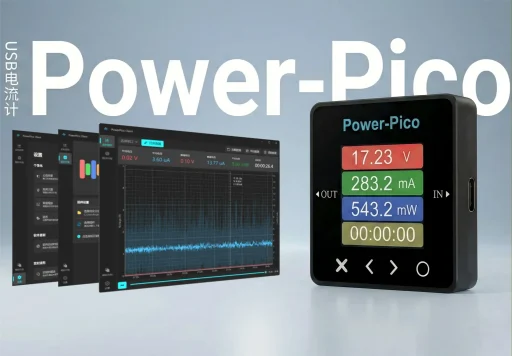
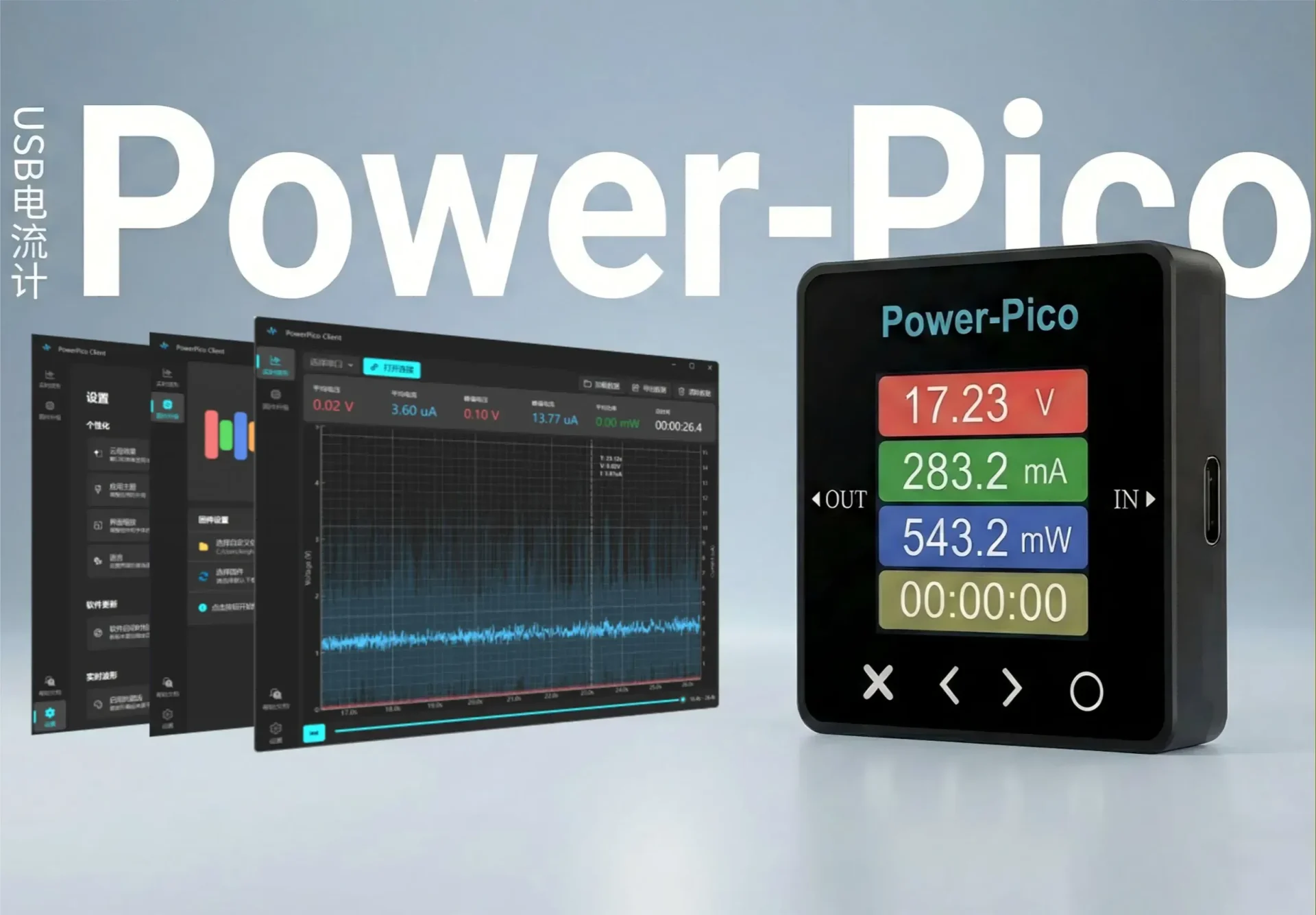
Today I want to introduce an impressive open-source hardware project: PowerPico, a portable USB current meter and power analyzer designed for microamp (μA) level current measurement. This device is perfect for low-power device development and testing, and it also supports PD/PPS fast charging protocol triggering, functioning as an adjustable power supply!
As more devices become battery-powered—from IoT sensors to wearable electronics—precise power consumption measurement has become essential for developers. PowerPico addresses this need by providing a professional-grade yet affordable testing tool.
Project Overview
PowerPico is an open-source hardware project developed by no_chicken and published on LCEDA/OSHWhub platform. It was created as part of the Spark 2026 initiative, a program that encourages innovation in embedded systems and electronics.
Key Features
- Ultra-Low Current Measurement: Capable of measuring μA级 current with high precision, meeting the demanding requirements of low-power device development and testing
- PD/PPS Protocol Triggering: Supports standard PD (Power Delivery) and PPS (Programmable Power Supply) fast charging protocol triggering
- Adjustable Power Supply: Can act as an adjustable power source for various testing scenarios, supporting multiple voltage and current configurations
- Elegant Desktop Software: Comes with user-friendly PC software for easy control, real-time monitoring, and data visualization
- One-Click Upgrade: Supports firmware upgrades with a single click via USB
- Data Analysis: Built-in data analysis capabilities for comprehensive power profiling and consumption patterns
- Compact Design: Portable form factor makes it easy to carry for field testing
- Open Source: All design files are available for learning and modification
Technical Specifications
Core Components
- MCU: 32-bit microcontroller (likely based on ARM Cortex-M architecture)
- Current Sensing: High-precision op-amp with shunt resistor for μA measurement
- USB-C Interface: Modern USB-C connector for data and power
- Display: OLED or LCD display for real-time readings
Measurement Range
- Current Range: From μA to mA range (typical resolution: 0.1μA)
- Voltage Range: Supports 3.3V to 20V (PD range)
- Power Measurement: Calculates power consumption in real-time
- Accuracy: High precision suitable for professional development
Design Highlights
Creative Points
- Bidirectional Current Measurement: Can measure both current sourcing and sinking, essential for battery-powered devices
- Continuous Logging: Records power consumption over time for comprehensive analysis
- Protocol Analysis: Not just a power meter—can trigger and analyze PD protocols
- Quick Discharge Function: Built-in capacitor discharge capability for testing
- Temperature Monitoring: Monitors device temperature during operation
Design Considerations
The design follows best practices for precision measurement:
- Four-wire Kelvin sensing for accurate voltage measurement
- Low-offset op-amps to minimize measurement error at μA levels
- Proper PCB grounding to reduce noise interference
- USB-C CC logic for proper PD negotiation
- Thermal design to handle power dissipation at higher currents
Industry Applications
1. IoT Device Development
Internet of Things devices often run on batteries for months or years. PowerPico helps developers:
- Measure quiescent current (Iq) of MCUs and sensors
- Profile power consumption during different sleep states
- Optimize duty cycling for maximum battery life
- Verify low-power claims in datasheets
2. Wearable Electronics
Smartwatches, fitness trackers, and health monitors require careful power management:
- Test battery life under various usage scenarios
- Measure power consumption of display, sensors, and radios
- Optimize firmware for all-day or multi-day battery life
- Validate charging circuits and battery management
3. Arduino & ESP32 Projects
Hobbyists and makers can benefit from:
- Understanding the actual power consumption of their projects
- Choosing between battery options (LiPo vs. AA vs. supercapacitors)
- Implementing proper sleep modes in their firmware
- Building battery-powered outdoor projects
4. USB-C & PD Protocol Development
For developers working with USB-C:
- Testing PD trigger capabilities without expensive lab equipment
- Debugging USB-C power negotiation issues
- Developing USB-C powered devices
- Validating PPS output quality
5. Electric Vehicle & E-Bike Charging
For low-power charging applications:
- Testing USB-PD power banks
- Evaluating charging cables and adapters
- Debugging charging issues in devices
6. Scientific Research & Education
In academic settings:
- Laboratory experiments requiring precise current measurement
- Physics demonstrations on power consumption
- Engineering student projects
- Research on energy harvesting devices
7. Quality Assurance & Testing
For manufacturing and QA:
- Batch testing of production units
- Verifying power specifications of components
- Root cause analysis of power-related failures
- Acceptance testing for battery-powered products
Replication Suggestions
If You Want to Build Your Own
- Get the PCB Manufactured: Use JLCPCB or similar service—the design files are available on OSHWhub
- Source Components: Most parts are commonly available from LCSC or Digikey
- Soldering: Requires moderate soldering skills due to small components
- Flash Firmware: Download from the project page and flash via USB
- Calibrate: Follow the calibration procedure in the documentation
Recommended Tools
- Precision screwdriver set
- Hot air rework station
- Multimeter for initial testing
- Stable 5V power supply for initial programming
Tips for Success
- Pay attention to the shunt resistor placement for accurate readings
- Follow the PCB layout for optimal noise performance
- Use proper USB-C cables (not charge-only cables)
- Update to the latest firmware for best performance
- Read the project documentation thoroughly before starting
Comparison with Similar Products
While commercial solutions like the Joulescope or Keysight N6705C exist, PowerPico offers:
- Affordable Price: A fraction of professional equipment cost
- Open Source: Full access to hardware and software
- PD Triggering: Unique feature not found in basic current meters
- Community Support: Active community on OSHWhub for help
- Learning Opportunity: Great for learning embedded systems design
Conclusion
PowerPico is an excellent open-source tool for anyone working with low-power devices. Whether you are a hobbyist, embedded developer, hardware engineer, or student, this portable current meter and power analyzer can be a valuable addition to your toolkit.
The combination of precise current measurement, PD protocol triggering, elegant desktop software, and data analysis capabilities makes it a versatile instrument for modern electronics development. The fact that it is open-source means you can not only use it but also learn from its design and even modify it for your specific needs.
As we continue to see growth in battery-powered IoT, wearable devices, and portable electronics, tools like PowerPico become increasingly important for creating efficient, long-lasting products.
Project Links
- Original Project: PowerPico on OSHWhub
- Platform: LCEDA/OSHWhub (立创开源硬件平台)
- License: Open Source Hardware
Published on March 23, 2026