
Introduction
Measuring ultra-low current on modern embedded devices is never as simple as using a standard multimeter. When you need to analyze sleep current, wake-up spikes, USB-C power negotiation, or PD/PPS output behavior, conventional tools are often too limited or too inconvenient.
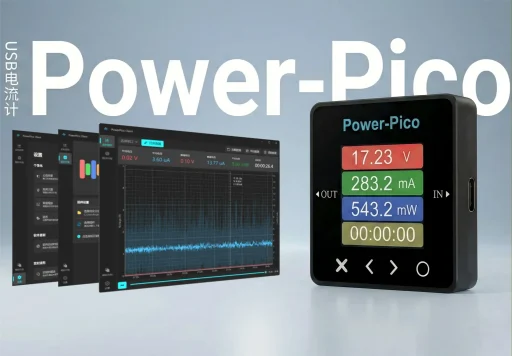
That is where PowerPico stands out. It is more than a portable USB current meter. It is a low-power measurement analyzer designed for embedded developers, hardware engineers, and advanced makers who need both μA-level current measurement and adjustable PD/PPS power output in one compact tool.
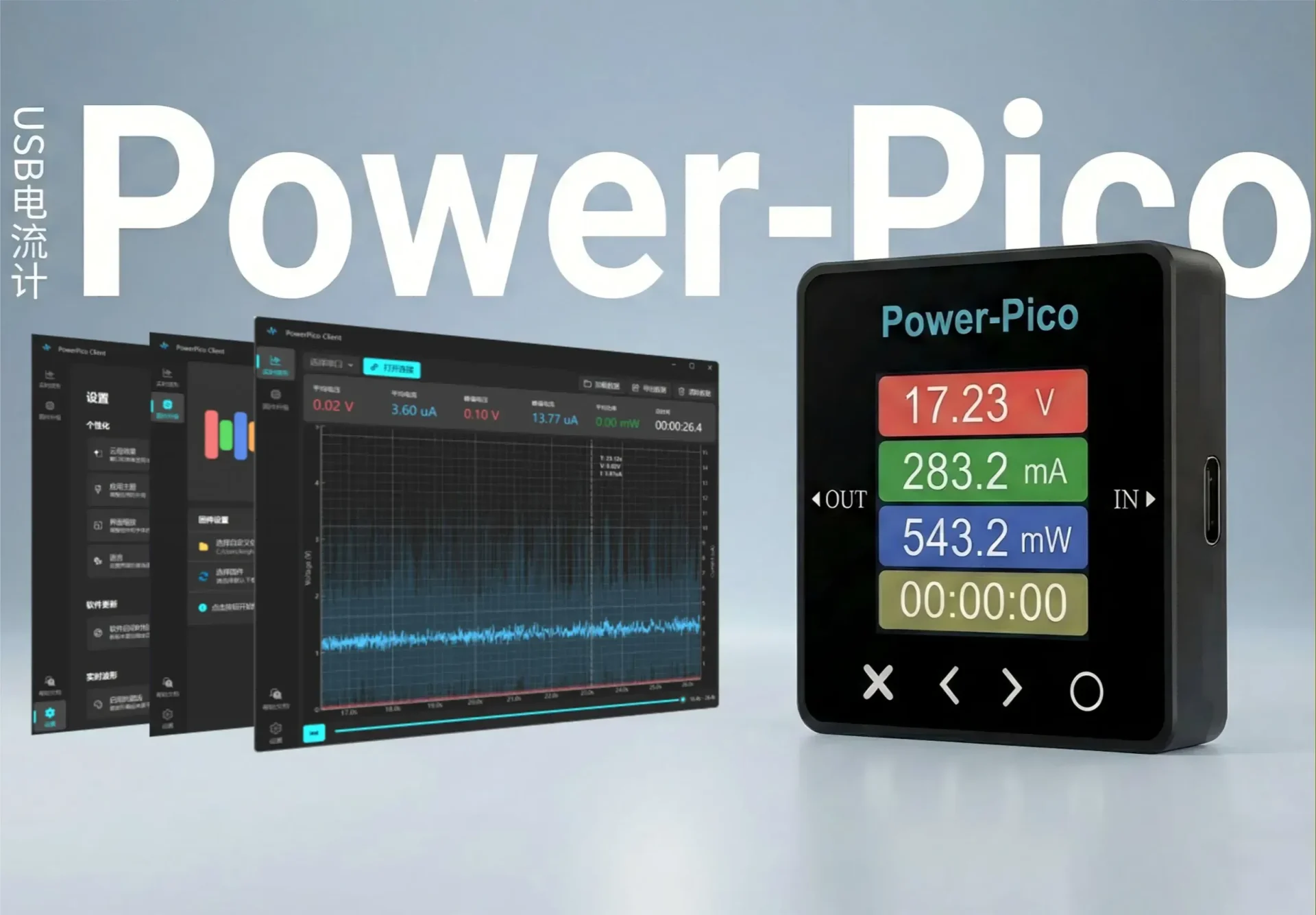
According to the publicly available project information, PowerPico supports a 1μA to 5A measurement range, PD2.0/PPS protocol triggering, and up to 20V/5A output, while also providing a PC client for waveform display, logging, and data analysis.
What Is PowerPico?
PowerPico is a portable open-source hardware tool created for developers working on low-power electronics and USB-C powered systems. It combines the roles of a USB ammeter, power analyzer, and PD/PPS trigger device into a single platform.
This makes it especially useful for:
- low-power firmware debugging
- battery-powered device validation
- USB-C and fast-charging development
- current profiling for embedded systems
- portable electronics testing in the lab or on the go
Unlike many generic USB testers, PowerPico is positioned as a product-grade portable analysis tool rather than a simple voltage/current display meter.
Key Specifications
Based on the public project description, PowerPico includes the following notable specifications:
- Measurement range: 1μA to 5A
- Fast-charging support: PD2.0 / PPS triggering
- Adjustable output: up to 20V / 5A
- MCU: STM32F411CEU6
- Current sensing: INA190 zero-drift amplifier
- Display: 1.54-inch 240 × 240 TFT screen
- PC software: PowerPico Client built with PySide6
- Connector type: USB Type-C
- Form factor: portable enclosure with open-source hardware resources available
These hardware choices are important because they show that the project was built around precision, usability, and portability, not just simple current readout.
Why PowerPico Is Different
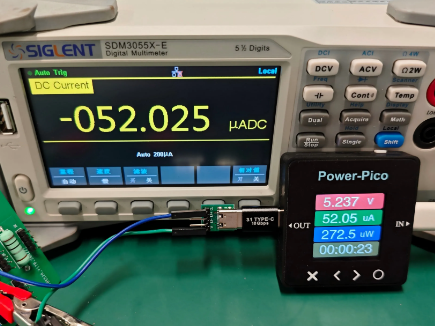
1. It handles μA-level low-power measurement
For IoT nodes, wearables, and battery-powered development boards, standby current often matters more than peak current. PowerPico is designed specifically to deal with this challenge, making it suitable for measuring tiny sleep-mode current that ordinary USB meters cannot handle well.
2. It covers both tiny current and high-current scenarios
A 1μA to 5A range gives developers a much broader view of device behavior. You can use one tool to observe standby leakage, active-mode current changes, and higher-load behavior during charging or communication.
3. It supports PD/PPS triggering
This is one of the most practical features of the project. PowerPico is not only for measuring current; it can also negotiate PD2.0/PPS and provide adjustable output up to 20V/5A, which is extremely useful for USB-C power development, trigger testing, and fast-charging experiments.
4. It includes PC-based analysis tools
The official project information mentions a dedicated PowerPico Client built with PySide6, supporting real-time analysis and data export. That makes the device more useful for debugging than a standalone meter with only a small screen.
Best Use Cases for PowerPico
Embedded Low-Power Development
PowerPico is especially valuable for embedded engineers trying to reduce standby consumption. It can help analyze sleep current, wake-up spikes, peripheral activity, and firmware-level power optimization.
IoT and Wearable Device Testing
Battery-powered products live or die by power efficiency. A tool that can capture both ultra-low current and normal operating current is ideal for sensor nodes, trackers, and wearable electronics.
USB-C and PD/PPS Debugging
Developers building USB-C powered products can use PowerPico to test power negotiation behavior, trigger different voltage levels, and verify PD/PPS output conditions without relying on multiple separate tools.
Education, Makers, and Open Hardware Learning
Because the project is open source and includes both hardware and software resources, it is also a strong learning platform for students, DIY makers, and engineers who want to study modern measurement tool design.
Hardware Highlights
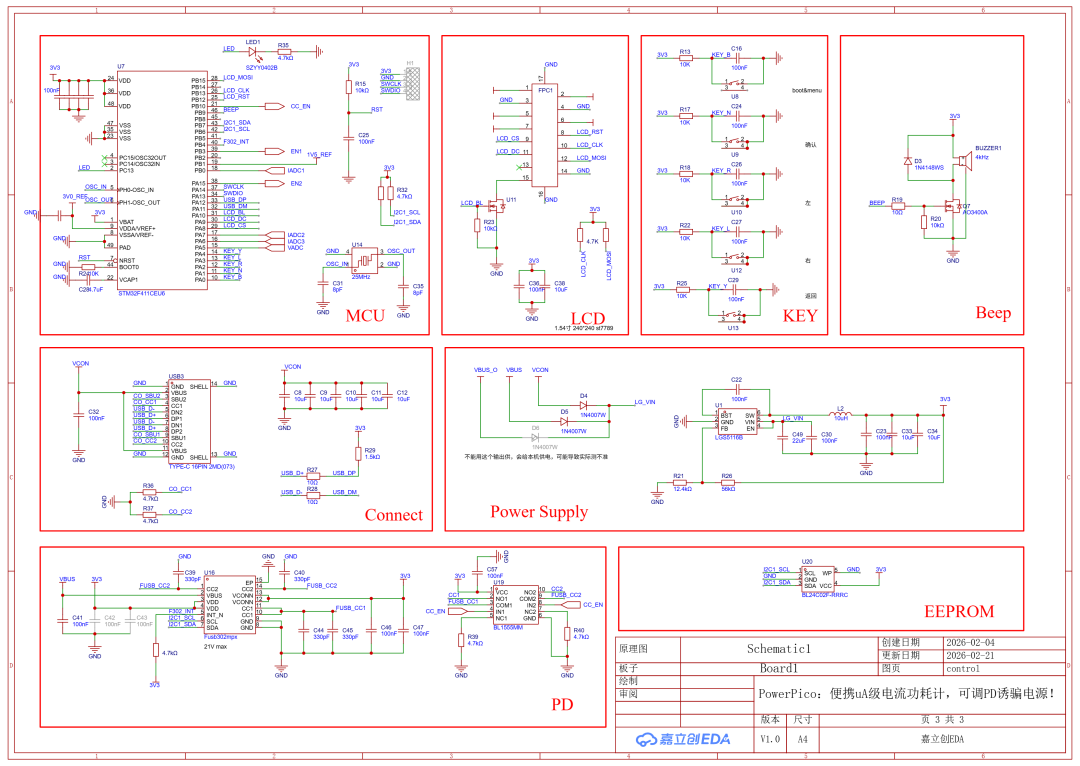
One reason PowerPico has attracted attention is that its design is not a rough prototype. The public project page highlights a more product-oriented implementation:
- STM32F411CEU6 for control and processing
- INA190 zero-drift amplifier for precision current sensing
- 1.54-inch TFT display for local visualization
- USB Type-C interfaces for modern accessory compatibility
- 3D-printed enclosure design for a more finished user experience
This combination suggests a tool built for real-world use, not just demonstration.
Can You Build Your Own?
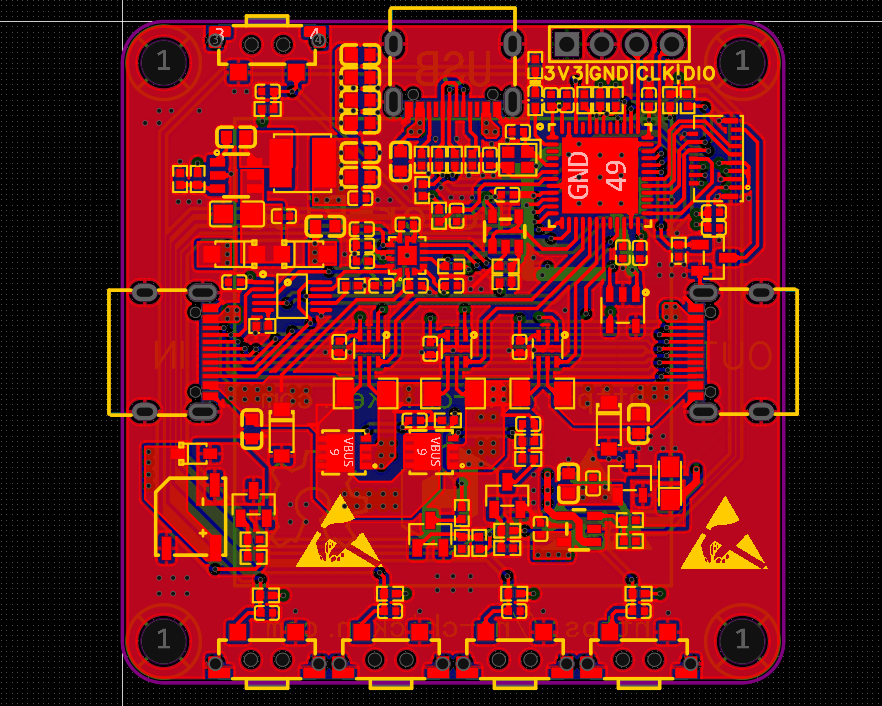
Yes. PowerPico is presented as an open-source hardware project, and the public resources indicate that users can:
- order the PCB
- source the components
- flash the bootloader and firmware
- assemble the enclosure
- install and use the PC client on Windows
For makers and engineers who enjoy replication, modification, or secondary development, this is a major advantage over closed commercial USB power analyzers.
Final Thoughts
PowerPico is one of the more interesting open-source hardware tools to appear recently in the low-power development space. Its biggest strength is that it combines μA-level current measurement, wide-range current coverage, PD/PPS trigger capability, and PC-based analysis in a compact portable format.
If you are developing embedded systems, battery-powered products, USB-C devices, or power-sensitive electronics, PowerPico is a project worth watching—and for many makers, it is also worth building.
Project Resources
- Original open-source project page: OSHWhub